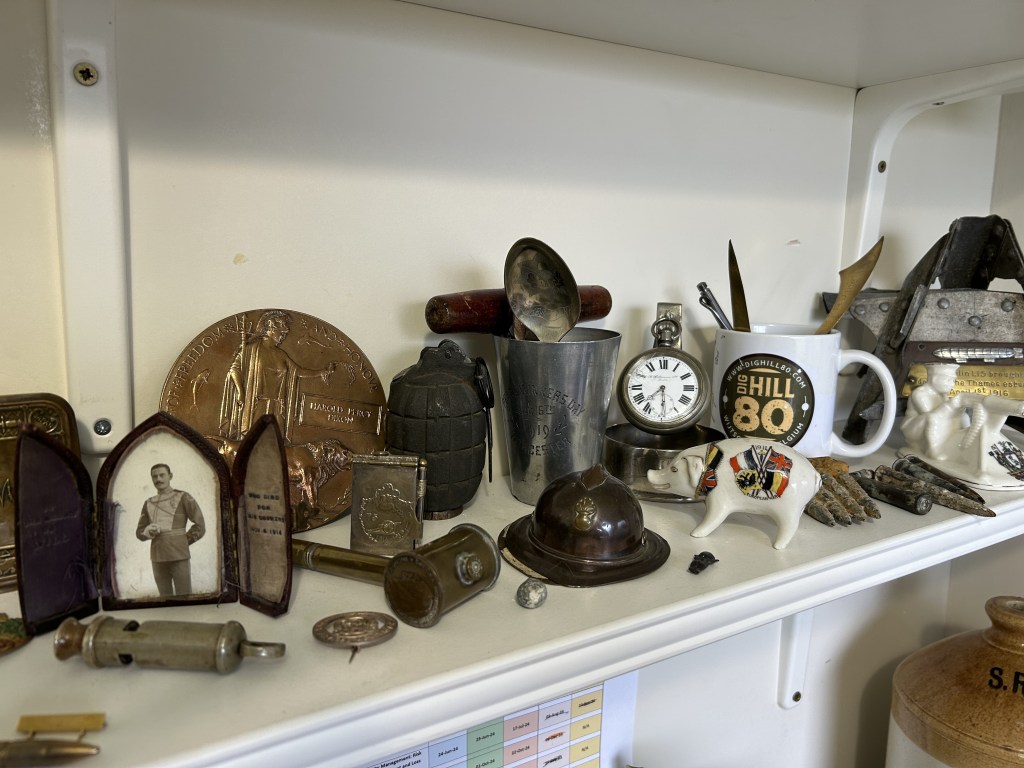
Over the years I have amassed quite a collection of militaria from the Great War and on these pages I would like to share some of these items with you.
My passion is enamel badges of the Great War but in reality I collect anything that has a connection with World War One. I have medals, postcards, trench art, weapons, ephemera, china, documents and maps – if it’s WW1 related I’ll probably consider adding it to my collection!
Gone but not forgotten
The scale of casualties sustained by all sides during WW1 was unprecedented, and the development of medical services and medical techniques at dealing with the wounded developed massively as the war progressed. For many soldiers a “Blighty one” – a wound serious enough as to require repatriation back to the United Kingdom, but, not serious enough to kill them was perhaps highly sought after.
For those men who did make it back to hospitals in the United Kingdom, there was a danger of being sent to a hospital many miles from ones home. While the medical services did everything they could to post men to hospitals near to their home towns this wasn’t always possible. The families of wounded soldiers were provided with a rail warrant, but what if a man had no family, or poverty meant that travel was impossible?
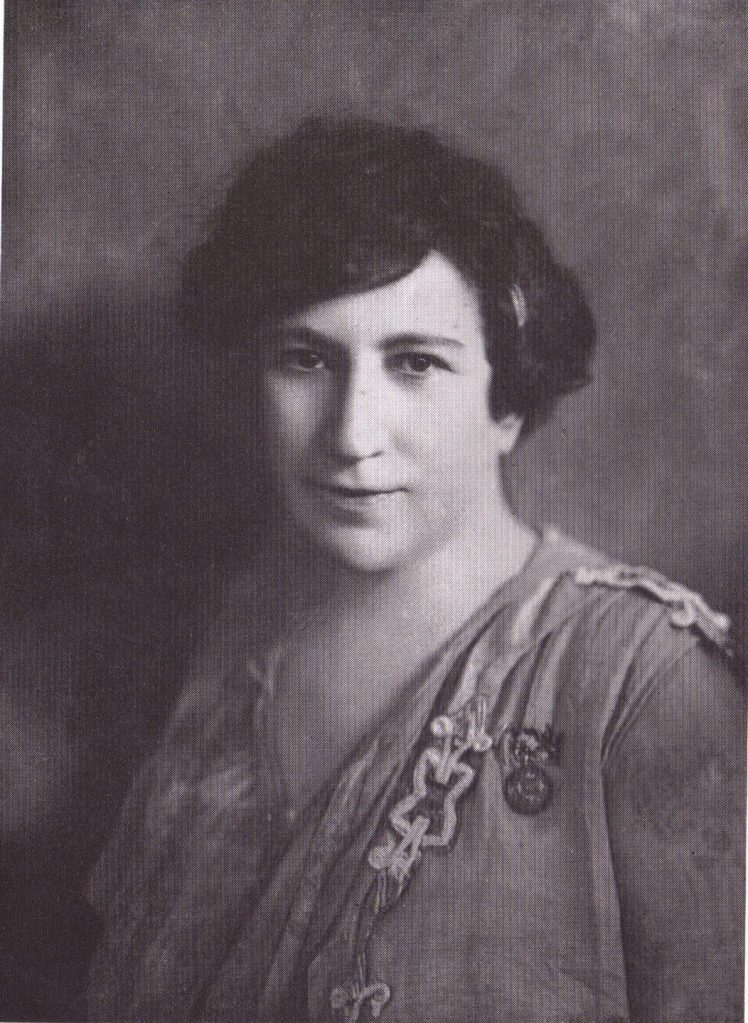
When WW1 broke out, an American opera singer, the soprano Marta Cunningham was living in London, and voluteered to work in an aid canteen and as a charity worker in London’s East End. Having sung in some of the world’s great theatres Cunningham provided concerts for free to entertain wounded men.
When the war ended, Cunningham continued her charitable endeavours and one afternoon in 1920 was visiting a London hospital when she enquired about how many, some two years after WW1 had ended, wounded soldiers remained in the hospital. To her shock she was informed that over 600 wounded men remained in the hospital. Cunningham visited many of these men and found them mostly, bored, lonely, and suffering. Further research identfied that around the country thousands of men were in similar situations.
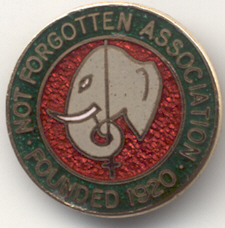
Appalled, Cunningham set up the Not Forgotten Association, whose badge features at the top of this post. The example here is dated 1922 on the back so comes from the very early days of the charity.
The aim of the Not Forgotten Association was to provide entertainment and support to wounded soldiers. Thanks to her own determination, perseverance and force of character, Cunningham soon set up an organisation that helped over 10,000 men in its first year. The charity provided concert and garden parties, day trips and outings, gifts and aid packs for men in hospital, books to read and perhaps more importantly provided funds to allow families to visit men in hospital for those whose financial situation prevented it. One soldier was visited by his wife and mother for the first time in over 14 months thanks to the work of the charity.
Cunningham continued running the charity until her death in 1937, and the organisation continues to this day. The presence of wounded soldiers at Wimbledon, the FA Cup final, the Lords Test and many other sporting events each year as part of the Not Forgotten Association, is a reminder of the remarkable work of one remarkable woman.
Poilu candle holder
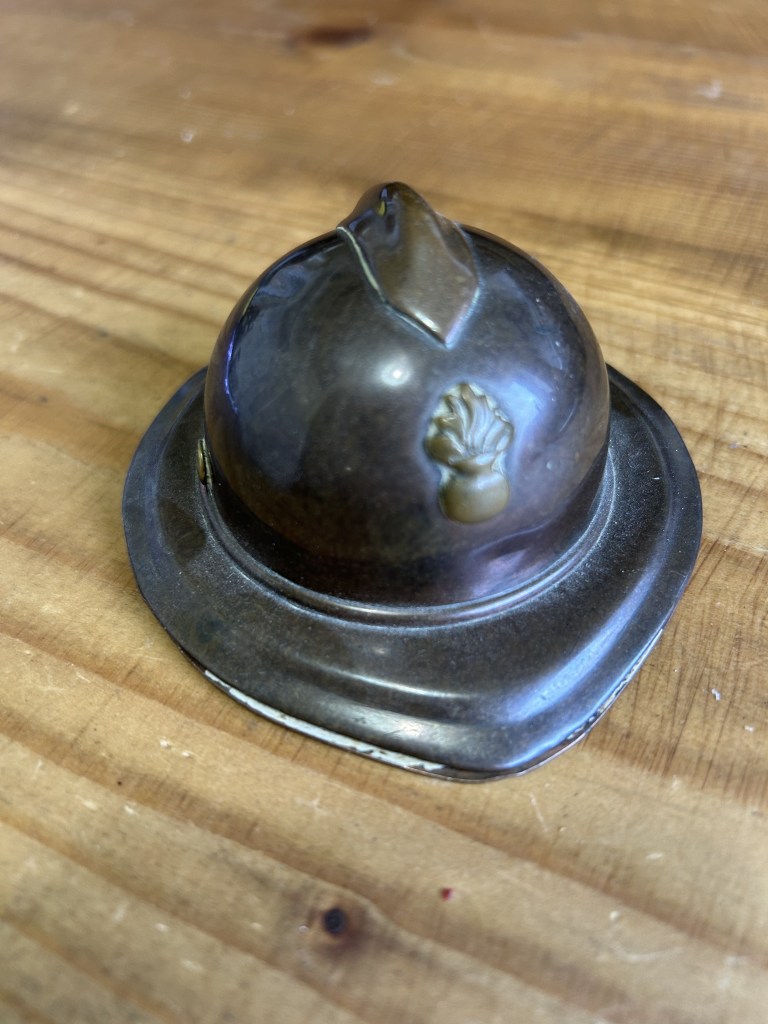

This lovely candle holder in the shape of a French poilu helmet is hinged at the back and closing the lid acts as a candle snuffer which extinguishes the candle inside.
There’s still the remnants of a candle inside and in my more romantic moments I do wonder whether this was actually used in a dugout during the Great War, perhaps to write a letter home. Who knows…..
 Footsteps of the fallen